Posts

Attachment - relationships

Image
I was lucky enough this week to have some training delivered by a psychologist (run more like a group therapy session!) on attachment this week. I have had previous training sessions on attachment but they were either overly detailed, too much about research and/or delivered knowledge that could not really be practically applied to the children I work with. In a nutshell - (like I like it!) The trainer started with the premise that every child is born with hard-wiring for survival. Obviously this makes a lot of sense in evolutionary terms. Therefore, whatever circumstance, family set-up, family behaviours etc a child is born into, they will adapt (and subsequently develop the hard-wiring) that will optimise their chances of survival. Getting a parent's attention is a crucial part of this survival so disorders to do with poor attachment are due to a child receiving, little, inconsistent and/or frightening attention from their parent/s. Strategies for getting these parents' a...

Debates

Image
Last night I stumbled across one of those 'debates' that erupt on Facebook every now and then. You know the ones - where one person posts their view and before you know it there are seventy or so post on the thread. You get the: •the rationalist •the idealist •the militant conspiracy theorist •the aggressor •the misses-the-point-the-other-person-made-er •the flippant •the questioner •the jump to someone's defence-er •the academic with evidence •etc all putting their throbbing pennyworth in the pot. What fascinates me is how those 'debates' go. This particular one I would surmise had little impact in terms of idea development or opening up others' mind to accepting another viewpoints. In fact, because there was some aggression and personal comments I would go so far as to say it probably shut down a few minds. This debate in part reflected the way we tend to approach conflict of ideas generally - in law, in education and in meetings: we are adversarial/oppositio...

Yes - they are good

Image

Crippled by Choice

Image
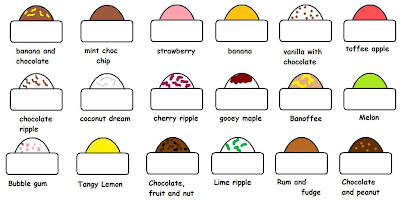
A very brief experience yesterday reminded me of a concept I read ages ago. The experience went like this: I was in a cafe looking at a new product (new to me anyway). It was unusual 'Hedgerow' cordials offered in about eight different flavours. I was tempted to buy a bottle but my indecision over which flavour would give me the most enjoyment meant I didn't buy anything. I was literally crippled into doing nothing by choice. Now that is ridiculous! However, there is researched theory that shows this is quite typical behaviour and retailers 'in the know' play this to their advantage. O.K. If you went into a restaurant and had to decide which of the following flavoured ice cream you were going to choose - which would you choose? Now imagine the same restaurant offered you this choice, which would you choose? Was choosing from eighteen or three different flavours easier? We tend to live under the impression that the more choice we have the happier we will be. There is...

Five Food Qs

Image
Ok here are some questions about food. I'd love to hear any passer-bys' answers..... 1) Would you rather go 24 hours without food or sleep? 2) If you had to choose three of the following foods as weapons in a food fight, which would you choose: •A jug of gravy •A can of squirting cream •10 cheese squares •A bottle of cola •Twenty soggy tea bags •A giant sausage •A bottle of ketchup •A bucket of grapes •A bunch of bananas •A box of eggs •A bag of brussel sprouts •A packet of crackers •A bag of flour •Some stinky blue cheese •Some bacon •Tomato soup •Custard •Six Yorkshire puddings •A bag of frozen peas •Chocolate sauce •Pickled onions •A large pumpkin •A bag of jam doughnuts •A packet of butter •A pot of cottage cheese 3) If you had to eat one of the following foods all day (and it was the only food you were allowed) which would you choose? •mashed potato •banana •porridge •spaghetti •chocolate •cottage cheese •buttered toast •pears •white fish 4) If you could d...

Sinking medieval churches

Image
I am reading Bill Brysons's book about the history of everyday living. It's packed with interesting snippets. He's basically done lots of research and pulled out all the interesting bits for the reader. My kind of book. It's turned me into a walking verbal fact box much to the delight of chap. I pop up regularly with an urgent need to tell him something new I have learned. Of course I'll expect him to read the book afterwards too. The part I have enjoyed most so far, however, I found on the first few pages. Bill B lives down the road from here in a Victorian rectory. One of our many 'where shall we go for a walk - let's look on the ordnance survey' walks in the Norfolk countryside runs between his house and the church he mentions in the book. And here is what he records from a conversation with a historian while wandering around that church (paraphrased): Have you ever wondered why Norfolk's medieval churches (all ten million of them) always lo...

The British Riots by Carl Jung - I think.

Image
I find myself still reading about the varied responses to the riots. There certainly appears to be considerable polarisation. There are still those holding firm to the idea that anyone that took part in the riots has lost his or her right to be considered fully human and be treated fairly and punishments are the only answer Some of the comments are astounding and you really would think you were listening to Nazis talk about the Jews). And there are the others of us looking a bit deeper for answers. The best article I have read on the issue of harsh sentencing is this one: Are the harsh sentences justified? We were never all going to agree on this emotive issue (or any other come to that) were we? Consensus is a very slow thing and usually shown in subtle shifts in attitudes and ways of doing things - unless we are under a dictator of course! I am now going to steal a bit of Carl Jung just to reiterate how the angle we approach things from affects our ultimate view. We all h...